
CIS IG1 Safeguard 6.4: Require MFA for Remote Network Access
by Heath Gieson
This article continues our CIS IG1 identity series by extending MFA protections beyond public applications and into the pathways users rely on to connect back to internal systems.
If externally‑exposed applications define the front door, remote network access determines how far someone can go once inside. VPNs, secure gateways, and remote desktop services provide direct pathways into internal environments and often operate with elevated trust. For attackers, these services are high‑value targets.
Remote access systems have been repeatedly leveraged in real‑world incidents because they offer broad reach with relatively little effort. Stolen credentials, weak authentication controls, and exposed services have led to widespread compromise across industries. When remote access relies on passwords alone, attackers only need one successful phish to move forward.
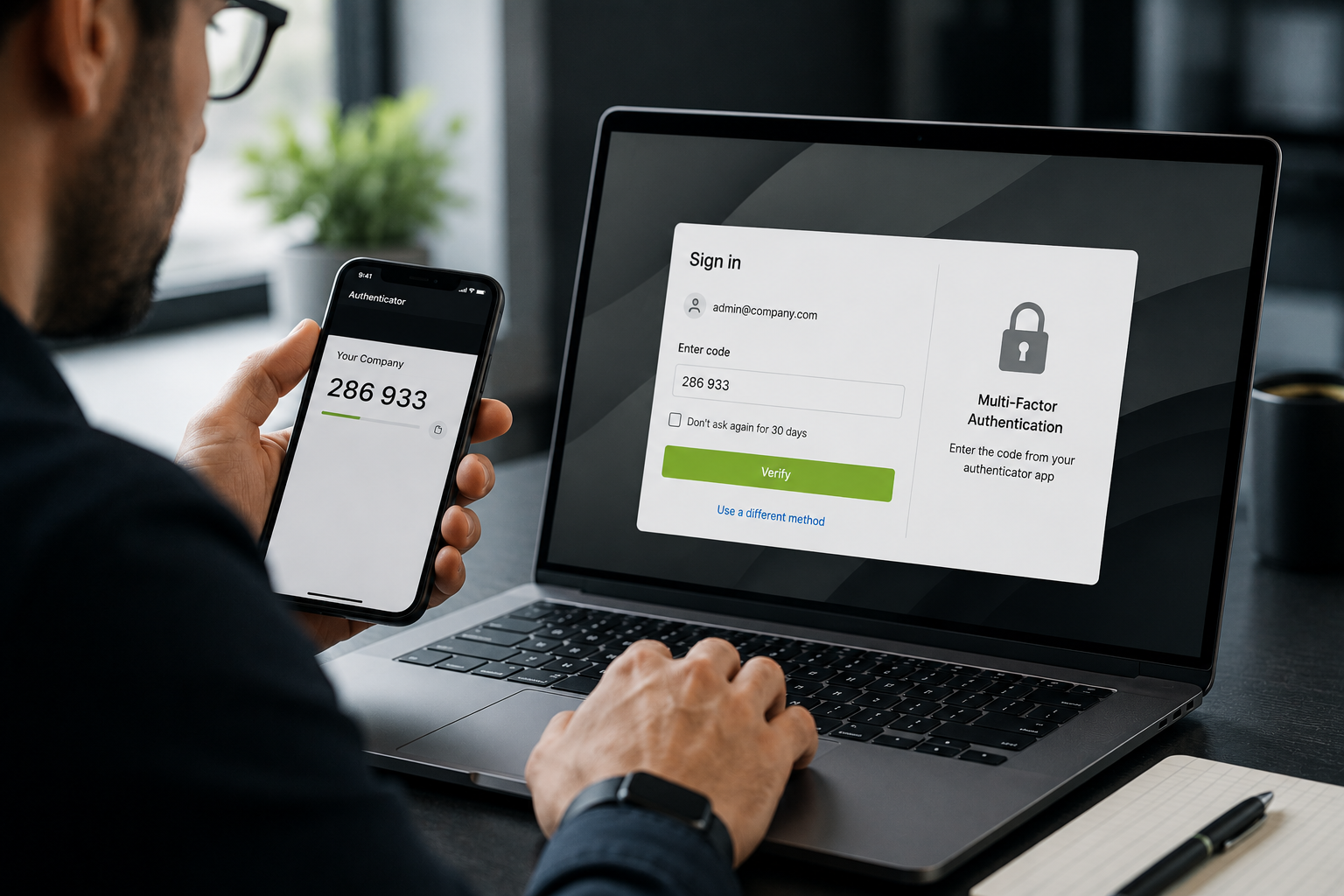
Requiring multi‑factor authentication for remote network access significantly changes that risk profile. MFA ensures that even when credentials are compromised, unauthorized access is far less likely. This is especially important in scenarios where users connect from unmanaged devices, home networks, or public Wi‑Fi environments.
CIS IG1 emphasizes this safeguard because it directly addresses one of the most common initial access techniques observed during incident response. By enforcing MFA at the point of entry, organizations reduce the likelihood that a single compromised account becomes an internal foothold.
From a business perspective, this control also creates clearer trust boundaries. Users retain the flexibility to work remotely, but access is explicitly verified using more than a single static factor. This aligns closely with modern zero‑trust concepts without requiring a full network redesign.
Implementation is typically straightforward. Most remote access technologies already support MFA through built‑in functionality or identity provider integrations. When deployed thoughtfully, the user impact is minimal compared to the operational disruption caused by a security incident.
External expectations around this control continue to rise. Cyber insurers, customers, and auditors routinely ask whether MFA is enforced for remote access. Being able to confidently answer “yes” simplifies these conversations and strengthens the organization’s overall security posture.
IG1 in practice, MFA is most commonly enforced at the remote access gateway itself, such as a VPN or secure access broker. This creates a single, consistent control point regardless of where users connect from or what internal resources they access. For many organizations, this change eliminates an entire class of credential‑based remote access risk.
While protecting remote access significantly reduces exposure, not all access carries the same level of risk. Some accounts are capable of altering security controls, accessing sensitive data, or impacting availability across the environment. CIS IG1 addresses this reality by placing its strongest expectations around administrative access.