
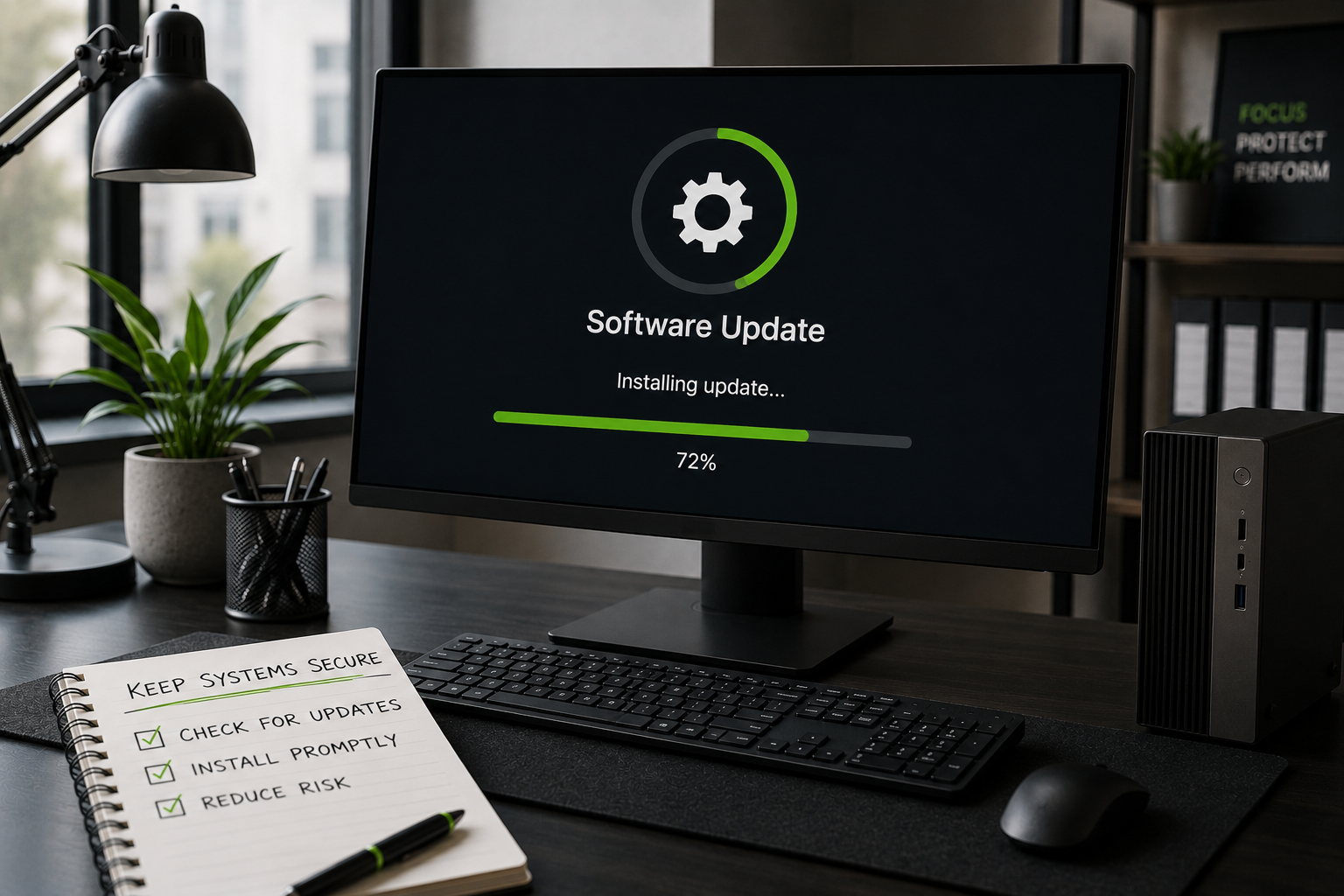
Why More Updates Are Coming — and Why That’s a Good Thing
Over the next several weeks, organizations are likely to notice something familiar but more pronounced than usual: an uptick in software updates across devices, operating systems, browsers, and applications.
This isn’t random. And it isn’t a sign that security is slipping.
Major technology companies are beginning to use advanced vulnerability discovery tools — including Anthropic’s Mythos — to examine their own products more deeply and more efficiently than ever before. These systems are surfacing classes of security issues that were previously difficult, time‑consuming, or impractical to find.
As vendors see more, they fix more. And fixes show up as updates.
This marks the beginning of an upswing in patch volume — not because products are suddenly worse, but because visibility has dramatically improved.
This Is the Start of a Healthier Cycle
For years, vulnerability discovery operated at human speed. Researchers found issues gradually, vendors addressed them in batches, and patch cycles felt predictable.
Tools like Mythos change that dynamic.
They allow vendors to:
- Inspect massive codebases more thoroughly
- Identify subtle or long‑standing security issues
- Validate assumptions that once went unquestioned
- Address weaknesses before they’re widely abused
The natural outcome of that improvement is more remediation activity.
More updates don’t mean more danger. They mean risk is being identified earlier and handled more deliberately.
Why This Matters for Businesses
From a business perspective, this is exactly the direction security should be moving.
Increased patch activity signals that:
- Vendors are investing in proactive defense
- Security research is shifting from reactive to preventative
- Long‑standing blind spots are being reduced
- The gap between discovery and remediation is narrowing
This does, however, challenge one of the most persistent myths in IT.
The Myth That Needs to Go Away
The myth is that patching is occasional — something you “do” once systems are set up.
The reality is that as software ecosystems become more complex and more observable, updates naturally happen more often. That’s not instability. That’s maturity.
Patching is no longer a background task. It’s an operational signal that software vendors and security teams are actively paying attention.
The Signal to Take Away
If you start seeing more update notifications, more advisories, and more patch activity, don’t assume something is wrong.
Assume this instead:
- Vendors are seeing more than they could before
- Defenders are moving faster than they used to
- Security is shifting left — toward discovery, not cleanup
This is what progress looks like.
Organizations that understand this shift and prepare for it calmly — with proper patch processes, communication, and expectations — will be far better positioned than those still hoping updates slow down.
They won’t.
And that’s a good thing.